XirCammini Camino Report
Introduction
Novices to the Camino would be pardoned to think that “Camino” refers only to the Camino de Santiago. Some even think that the Camino de Santiago is only the Camino Francés from San Jean Pied-de-Port to Santiago de Compostela (or just the last week of it from Sarria to Santiago)! The truth is that the Camino de Santiago spans over 82,000 km across 29 countries, all culminating at the Cathedral in Santiago de Compostela.
Moreover, although there are over 50 ancient pilgrimage routes across Europe, from various kingdoms, princedoms and Bishopric states, dating back to the Middle Ages, seven of these are designated as European Cultural Routes by the European Union. The Camino de Santiago is only one of these seven routes.
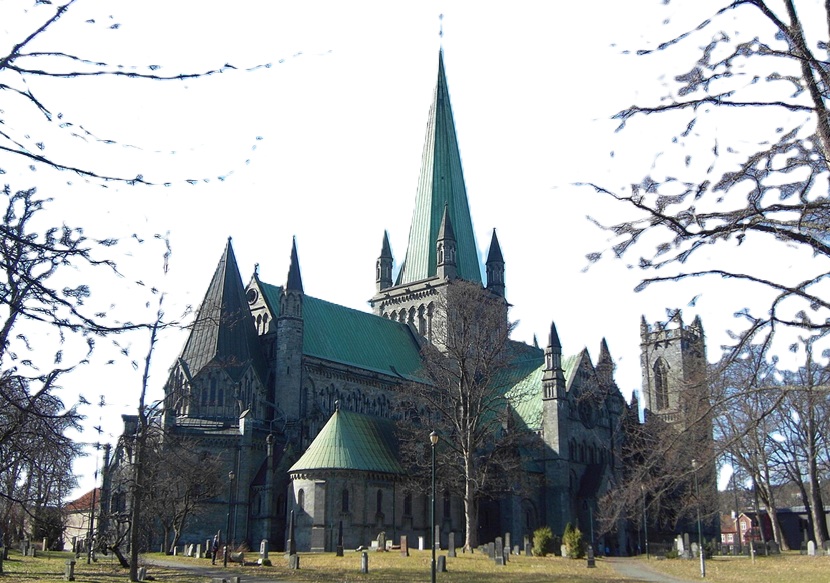
Another one of these seven Caminos is the OlafWeg, or the Pilegrinsleden, in Scandinavia. OlafWeg is not just one long-distance hiking route. It is nine long-distance hiking routes that arrive at Nidaros Cathedral in Trondheim, Norway, in honour of King Olaf II, or Olaf Haraldson of Norway. This is the northernmost Camino designated as a European Cultural Route. If you are familiar with the Camino de Santiago, think of the OlafWeg as a quieter, more raw (if not wilder) and more scenic Camino.
King Olaf II of Norway
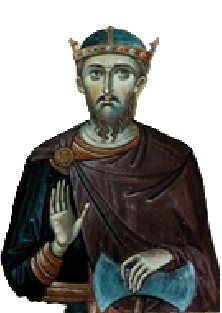
Olaf Haraldson was a fierce Viking Chieftain that took an active part in European raids until he was baptised in Rouen, France. Returning to Norway, he sought to unite it into one country under one king and brought missionaries from England to evangelise the Viking communities. In 1015, he became the first nationwide King of Norway.
King Cnut of Denmark and some of the Norwegian chieftains waged war against King Olaf, forcing him into exile in 1028. He died at the battle of Stiklestad in 1030, trying to reclaim is throne.
King Olaf II was declared Rex Perpetuus Norvegiae following reported miracles after his death. Nidaros Cathedral was built between 1070 and 1300 on the original grave site of King Olaf and, in time, it became a place of pilgrimage until the Protestant Reformation of the mid-16th century. In 1537, Lutheranism banned such pilgrimages. The route was revived as a European Cultural Route in the 20th century, with the Lutheran Church of Norway embracing the return of the pilgrimage and playing an active part today.
OlafWeg | Pilegrinsleden | An Overview
Around 4,000 pilgrims walk segments of the Olavs Caminos (also known as Olafweg or Pilegrimsleden, referring to one of the seven routes that arrive in Trondheim). Fewer than 1,000 pilgrims complete a full long-distance Olafweg each year.

The routes pass through deep Nordic forests, scenic lakes, agricultural valleys, mountain crossings, ancient burial mounds, and medieval rural churches and stop at Nidaros Cathedral, a 700-year-old Gothic Cathedral in Trondheim.
While these Caminos historically attracted mostly Nordic, German and Dutch pilgrims, it is now increasingly attracting also some American and Asian hikers.
Paths vary from forest trails, grass stretches and gravel roads and some asphalt. The route is moderately hilly with gentle climbs. There is no technical mountaineering, making sections suitable for walking or cycling.
The best season to walk it is summer within the June – Sept window when mountain snow has melted and rural accommodations are open.
Terrain, Difficulty and Main Attractions
If one were to embark on a full OlafWeg route, the main attractions would include majestic natural scenery (including national parks and waterfalls), the historic battle field of Stiklestad and its interpretation centre, wooden medieval churches (auch as the one of Ringebu), Hamar Cathedral ruins and, of course, Nidaros Cathedral with the tomb of St. Olav.
Pilgrims will encounter diverse under-footing, ranging from remote forest tracks and grassy paths to rustic gravel paths and paved asphalt, making the paths moderate-to-challenging hiking. Depending on the route that is chosen, there may also be mountain plateaus, involving high-altitude trekking such as at the Dovrefjell plateau, which reaches heights of 1,210 meters at the Allmannrøysa cairn.
Some of the routes, such as the route from Sweden to Norway, which are only moderately hilly, would also be suited for cycling.
Some 70% of pilgrims choose the Gudbrandsdalen path. This is better served in terms of accommodation and, potentially, baggage transfers.
A Typical Long Distance Route
Any of the nine long-distance Nordic Caminos will take up to 1 month to complete. This is a typical one, starting from Oslo and ending in Trondheim.
Week 1 | Section 1: Oslo to Lillehammer (The Lake Mjøsa Section)
The terrain consists of forest tracks, rolling agricultural hills, gravel roads, and brief paved sections and difficulty is rated as moderate. This first week does have some steady climbs through the Romerike landscape with excellent trail marking.
Key stops during this week, starting in Oslo, would include: Granavollen (day 3) and Lillehammer (day 7) with incredibly scenic lake views and also the ruins of Hamar Cathedral.
Week 2 | Section 2: Lillehammer to Dale-Gudbrand (The Lower Valley)
This week is characterised by steep valley sides, rocky paths, mossy woodland trails, and farm tracks. The difficulty level also climbs up a notch from moderate to strenuous, because of the constant elevations.
Key stops during this week, would include: Ringebu (Day 11), with its medieval, wooden, stave church and Hundorp (Day 15), rich in Viking history and incredibly scenic river panoramas, Oppdal/Dale-Grudbrand (day 21)
Week 3 | Section 3: Dale-Gudbrand to Oppdal mountain crossing
The terrain changes to alpine tundra, rocky bogs, scree fields, and open mountain passes and the difficulty becomes strenuous. This is the most challenging and weather-dependent week of the entire trek.
Key stops would include Fokstugu (Day 18) which is a relentless ascent into the gateway of the mountains and Oppdal (Day 22)across the Dovrefjell Plateau. Here you will reach the trail’s highest point at Allmannrøysa (1,210 metres), and navigate barren, wind-swept landscapes.
Week 4 | Section 4: Oppdal to Trondheim (Trøndelag Lowlands)
As one descends, the terrain changes to muddy forest paths, rolling river valleys, peat bogs, and coastal asphalt and the difficulty level reduces again to moderate with low elevations but the possibility of highly waterlogged and muddy underfoot.
Key stops on this last segment include Rennebu and Skaun (Days 23 and 26), characterised by deep descents through pine forests and farming communities and Trondheim (Day 30). Here the pilgrim is rewarded with vistas of the Trondheim Fjord, before arriving at the Gothic Nidaros Cathedral.
Accommodation & Baggage Transfers
For those accustomed to the Camino de Santiago, the infrastructure on these Nordic routes can be very different, if not, at times, spartan and sparse. Accommodation includes rustic accommodation, historic farmhouses and mountain refuges and local campsites. Pilgrims also have the right to pitch a tent (Allemannsretten or Right to Roam) on non-arable land while hiking.
Pilgrim centres in places such as Oslo, Hamar, Dale-Gudbrand, Dovrefjell, and Trondheim can provide information, accommodation and also pilgrim stamps.
Daily baggage transfers are not available throughout the whole route but only for specific segments.
To Pack or Not to Pack?
This is always at the top of the list of questions.
The reply depends on whether one is going for the full, long-distance (circa 1 month) Camino or for the last week of the Camino to Trondheim. It also depends on whether or not one would use daily baggage transfers (where available).
Undoubtedly, the packing list should include hiking boots that are water proof and have been broken into. Strong ankle support is highly recommended because of the muddy, mountain terrain.
Rain-gear would also share top-spot on the packing list.High-quality, breathable Gore-Tex waterproof jacket and rain pants are essential for unpredictable Norwegian weather. Clothing should be layered with merino wool base layers, a mid-layer fleece and lightweight hiking trousers. It is recommended that one avoids cotton entirely and opts for technical trekking clothing. Socks should preferably be heavy wool-blend hiking socks and liner socks to prevent friction blisters.
For those who are not using daily baggage transfers a 40L to 50L pack with a fitted hip belt and an integrated, heavy-duty rain cover is a must. A lightweight sleeping bag liner (mandatory for hostel/farm beds) or a full tent, mat, and 3-season bag if camping would also be required.
Offline GPS mapping app (like the official Pilegrimsleden Map) alongside a physical guidebook and a power bank are needed in view of the long stretches between mountain outlets.
In addition to the pilgrim passport (obtainable from the Oslo Pilgrim Centre) other essentials include purification tablets for the occasional open stream refills in agricultural areas. For those who suffer from blisters, blister cushions, antiseptic wipes and medical tape would not go amiss.
Camping or Lodging?
On the long-distance hikes, lodging (whether farms, hotels, B7Bs, refuges or churches) may always be available. Also, Norway is considerably more expensive than several other European countries and, therefore, one has to think twice before endeavouring to book accommodation for a whole month. The right to camp provides a more economically viable option for those who are happy to carry all their belongings on their back (40L or 50L backpack) and camp in between available lodgings.
A 1-week Option?
Not all of us have the luxury to unplug for 1 month and undertake a long distance Camino. Equally so, some of us like their “creature comforts” such as lodging (rather than camping) after a day’s walk and daily baggage transfers that allow us to carry only a 20L – 25L daypack.
The good news is that this is also available on the OlafWeg.
One would need to travel by train from Oslo to Berkåk and then walk the remaining 119 km from Berkåk to Nidaros Cathedral in Trondheim. This route provides both daily indoor lodging and continuous baggage transfers.
A 7-day itinerary:
- Day 0: Take the scenic Dovrebanen train line from Oslo directly to Berkåk station.
- Day 1: Walk from Berkåk to Meldal (approx. 18 km) mostly gravel tracks, grassy farm pathways, and quiet tarmac lanes. The level is moderate with gentle descents as you leave the higher alpine valleys and cross into agricultural fields. For baggage transfers, these are collected around 08:30 a.m. and delivered by mid-afternoon.
- Day 2: Meldal to Løkken Verk (approx. 15 km) of hilly woodland dirt paths mixed with industrial heritage gravel roads. This is a shorter day, of moderate difficulty, passing historic open-pit copper mines and old railway tracks.
- Day 3: Løkken Verk to Skaun (approx. 24 km) of dense pine forest trails, muddy peat bogs, and uneven wooden boardwalk bridges. Difficulty level here goes up a few notches to stenuous, with significant uphill climbs through mossy, wet Norwegian forests. Waterproof boots are a must.
- Day 4: Skaun to Øysand (approx. 20 km) steep dirt tracks descending sharply into rolling river valleys and coastal roads. Difficulty reduces to moderate with a lengthy descent that opens up to sweeping views of the river delta and the North Sea coast.
- Day 5: Øysand to Trondheim (approx. 22 km) is somewhat easier (after the previous four days of walking) with suburban asphalt pavements, concrete sidewalks, and urban park footpaths. The route is completely flat.
Arriving in Trondheim, the walk traverses the historic city streets, crosses the old town bridge, and arrives directly at the steps of the magnificent Nidaros Cathedral.
Exploring Trondheim: The Cathedral offers a daily, mid-day pilgrim blessing. One can also collect the Completion Certificate (Olavsbrev) before exploring the rest of the city.
XirCammini is a not-for-profit voluntary organisation dedicated to faith and heritage hiking. More information is available at https://XirCammini.org. If you would like to learn more about our group caminos across Europe or would like to join us, feel free to write to us on information@XirCammini.org | URL: https://XirCammini.org
Interested in walking a Camino(*)? Self-guided, with family or a small group of friends? You walk… We’ll handle the rest. Local airport transfers, daily baggage transfers, accommodation, even a Camino guide if you wish: Contact us on information@XirCammini.org | URL: https://walk.mt
(*) Selected routes only