It isn’t over until the fat lady sings.
James Portelli | XirCammini
Introduction
My father’s sold-out autobiography, “Tifkiriet” (1934 to 2009), was described by a columnist as, ”Memoirs of a Mandarin”. He probably packed ten times the years in each one that he lived. He was a walking, talking fountain of knowledge and a source of inspiration to all who knew him. Yet, he would have worn the badge of “mandarin” with honour. Despite holding high office for most of his career, he was always a man of the trenches. Although he had no qualms in speaking truth unto power; he rubbed shoulders in rolled-up sleeves, ever conscious that he himself started from the bottom rung. He always walked the talk. I’d also like to think that the apple did not fall far from the tree.
He firmly believed that in every situation, “it-tiġrija sal-barkun.” (A literal translation: A race ends at the finish line). There isn’t a dignified English idiom that reflects this. The closest is perhaps, “it isn’t over until the fat lady sings.”
Camino Maltés: When did it all start?
For the Camino Maltés, borrowing from the English idiom, the “fat lady” sang in summer 2026. The Camino Maltés, in its entirety, is now recognised on the register of the Cathedral of Santiago de Compostela. What do we mean by the Camino Maltés in its entirety? The Camino Maltés consists of the
- Malta segment from Rabat to Birgu and the ferry crossing to Valletta,
- Cammino di San Giacomo in Sicilia from the Church of St James in Caltagirone to the Sanctuary of St James in Capizzi (plus what the Camino Maltés added in Sicily between Pozzallo and Caltagirone and from Capizzi to Palermo to complete the whole Sicilian route),
- Central route of the Camminu Santu Jacu in Sardinia,
- Sea-crossings between Malta and Pozzallo, Palermo and Cagliari and Porto Torres and Barcelona,
- Segments of the Camino Catalan-Aragonés and Camino Francés until Santiago de Compostela. It is the longest Camino de Santiago on record at almost 3,600 km, including sea crossings.
As early as March 2017 (before registering XirCammini as a Voluntary Organisation with the Office of the Commissioner for Voluntary Organisations and the Superintendence of Cultural Heritage in Malta), we had already started working on re-establishing the Camino Maltés, respecting both history and current exigencies.
Why re-establishing? And how did we respect history? With the help of the late Rev. Can John Azzopardi, an eminent Maltese historian, and the National Library in Valletta, Malta, we lifted the following from the Council notes of the Order of St John of Malta (Liber Bullarum):
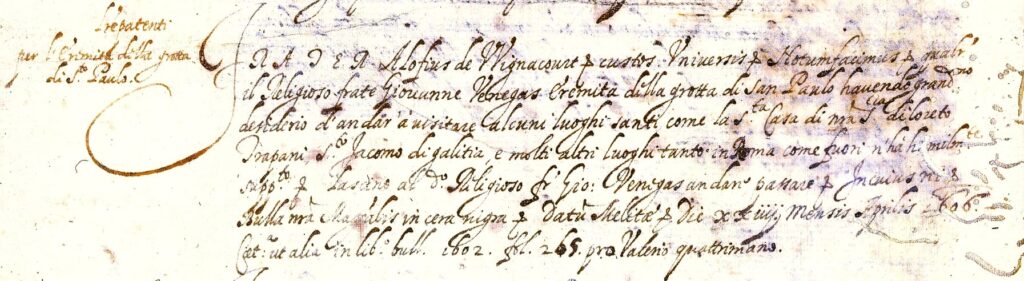
In 1602, Don Juan Benegas de Cordoba undertook a series of pilgrimages including Santiago de Compostela, Spain. During his travels, he also held audiences with Pope Paul V, Camillo Borghese and shared with him the vision of Grandmaster Alof de Wignacourt to turn the Grotto of St. Paul in Malta into a place of pilgrimage. The Pope donated to Malta several holy artifacts and relics towards this cause. These are now exhibited in the Wignacourt Museum in Rabat, Malta.
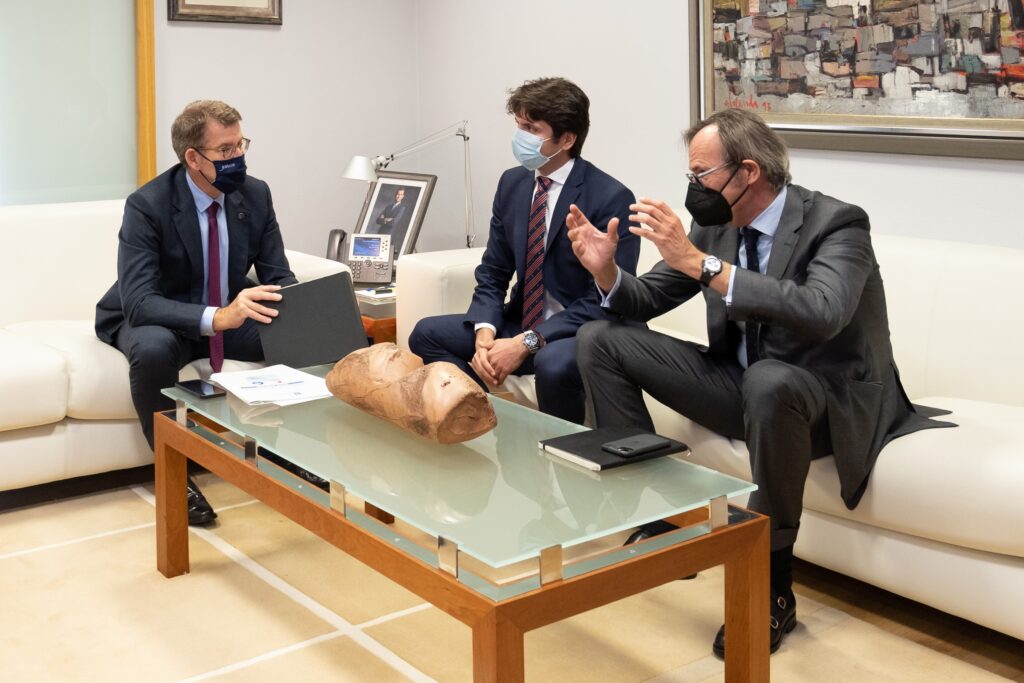
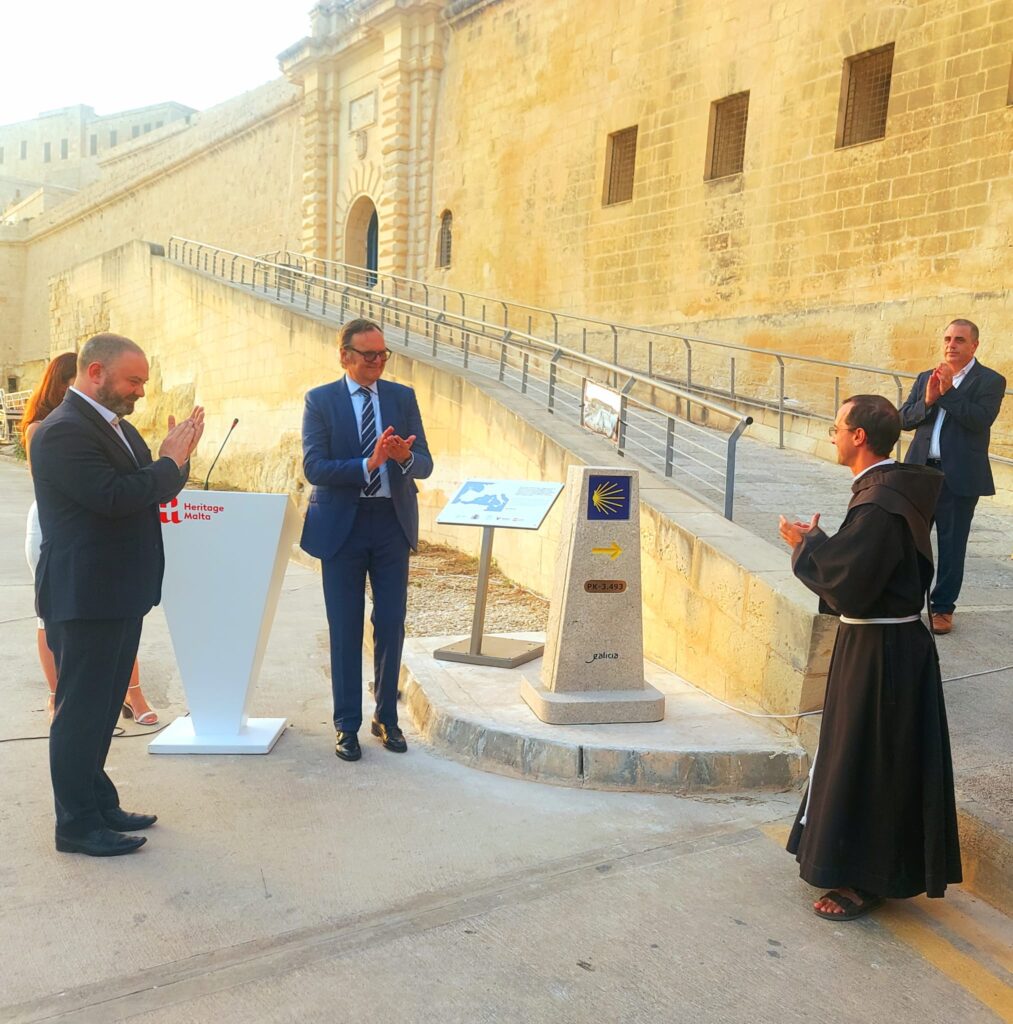
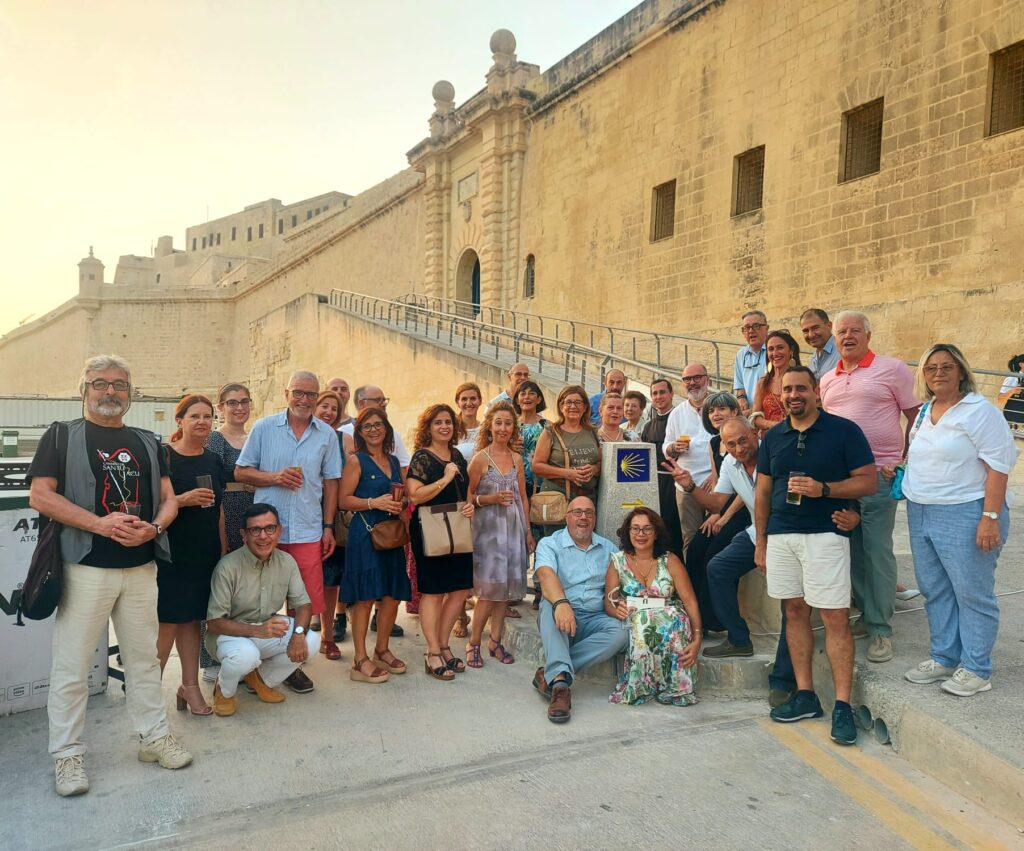
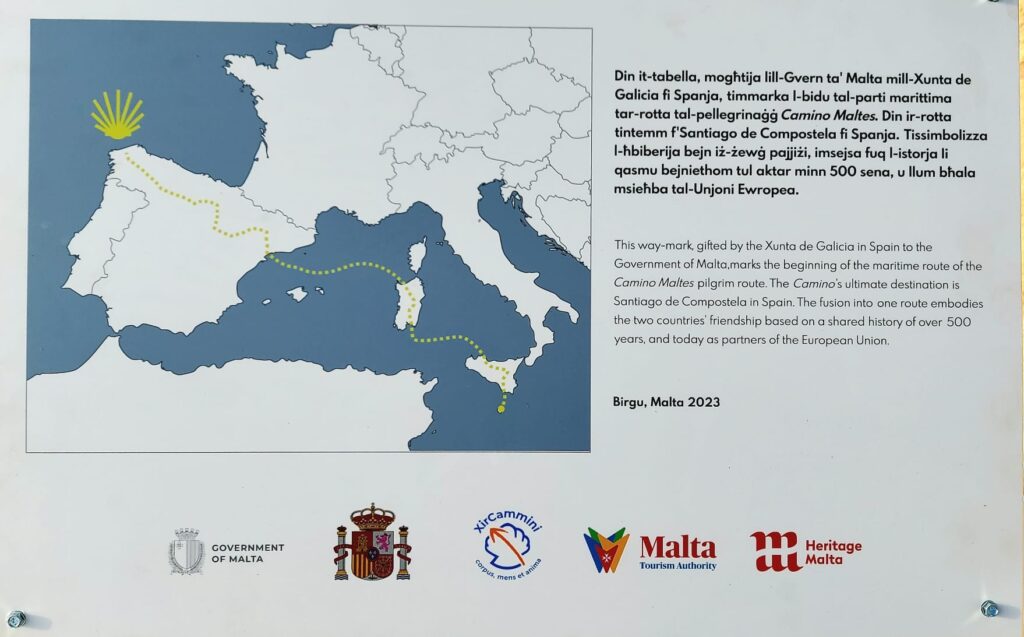
The present-day Camino Maltés respects sea routes previously used by the Maltese first under the Kingdom of Aragon and later on as part of the Kingdom of Spain and under the Order of St. John. Hence, the route via Sicily, Sardinia, and Spain from Barcelona. XirCammini argued the route viva voce with the Spanish Instituto Nautico and with the Spanish Federation of the Friends of the Way. We thank Jorge Martinez Cava for his invaluable support. The route was approved on historical grounds. We were also assisted in our endeavours by Visit Malta, Heritage Malta, the Maltese Ambassador to Spain, Daniel Azzopardi, the Spanish Embassy in Malta, Xunta de Galicia, Flavio and Marina from the Association Santu Jacu in Sardinia, Salvatore Trumino from the Borgo San Giacomo Association in Sicily and Jordi from the Camí de Sant Jaume.
What does this mean for Malta, Sicily and Sardinia?
The Camino Maltés has now made it possible for pilgrims starting in Sicily and Sardinia to claim a Distance Compostela Certificate irrespective of where they would have started on the Camino Maltés route.
We have worked very closely with the Pilgrims Office in Santiago de Compostela, providing them with the names of towns and villages in Malta, Sicily, Sardinia and from Barcelona to Santiago de Compostela, with the relative kilometres walked. We want to thank the Pilgrims Office for working with us to finalise this to the benefit of Malta, Sicily and Sardinia.
Unless travelling between the ports by sail, the Register of the Cathedral of Santiago counts only the kilometres walked by the pilgrim. It does not record the sea crossings. The following are some examples (all names are fictitious):
A pilgrim starting in in Rabat, Malta:
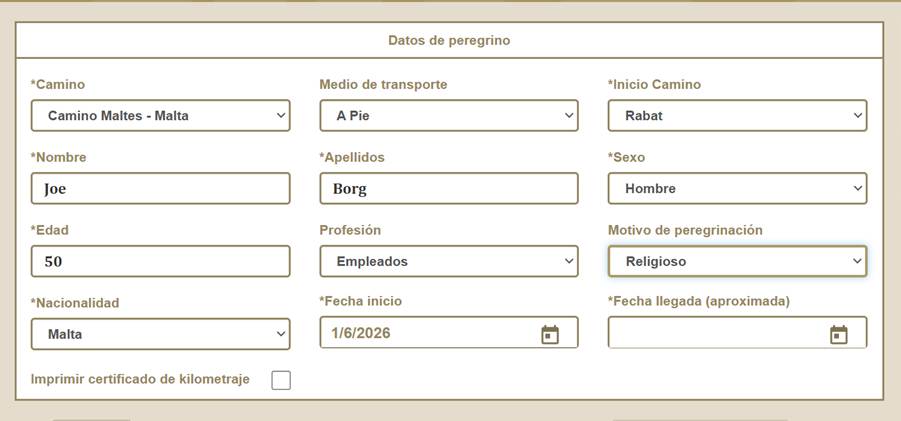
Joe Borg would be awarded a distance certificate that establishes the start as “From Malta” (Desde Malta) and would record 2,415 km (this is net of the sea crossings).
If Maria Russo from Sicily decides to start her Camino in Caltagirone :
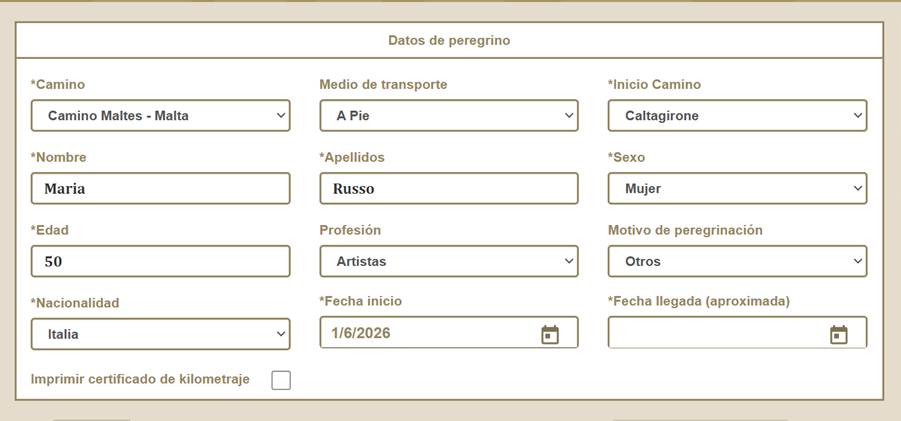
Maria Russo would be awarded a distance certificate that establishes the start as “From Italy” (Desde Italia) and would record 2,222 km (this is net of the sea crossings).
But Maria Russo can start it from any other town of village in Sicily that is on the Camino Maltés or the Cammino di San Giacomo in Sicilia, be it Ispica, Modica, Ragusa, Assoro, Nicosia, Capizzi, Monterosso Almo, Baghiera, Palermo and many other Sicilian locations on the Camino Maltés Route. For example, if Maria Russo starts in Pozzallo:
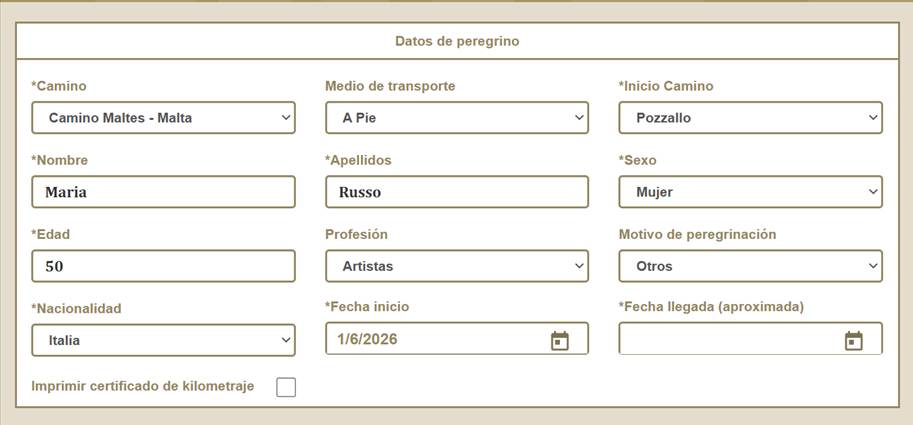
Maria Russo would be awarded a distance certificate that establishes the start as “From Italy” (Desde Italia) and would record 2,372 km (this is net of the sea crossings).
Similarly, if Antonio Sanna from Sardinia decides to start his Camino, for example, from Monserrato in Sardinia:
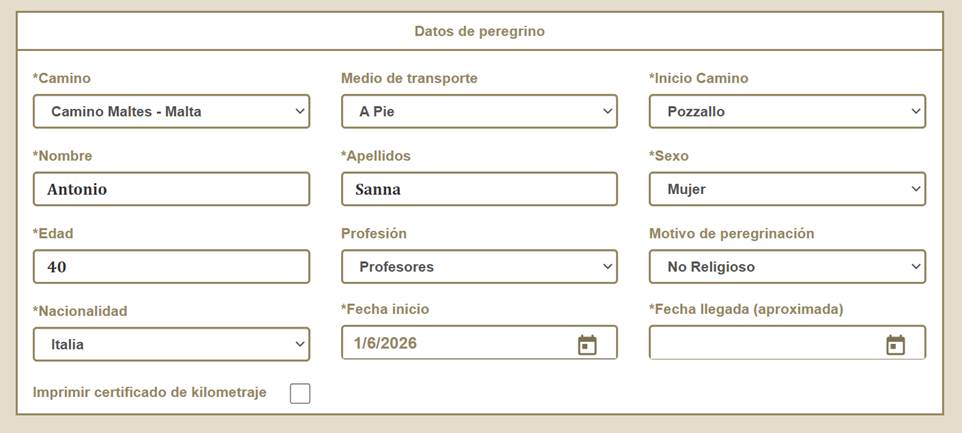
Antonio Sanna would be awarded a distance certificate that establishes the start as “From Italy” (Desde Italia) and would record 1,885 km (this is net of the sea crossings).
Antonio Sanna can decide to start anywhere on the Ruta Central of the Camminu Santu Jacu (Meana Sardo, Belvi, Sorgono, Nughedu Santa Vittoria, Sedilo, Bolotana, Bonorva and all the other towns on the central route of the Camminu di Santu Jacu in Sardinia adopted by the Camino Maltés.
Working with Partners
Achieving this for the Camino Maltés for Malta, for Sicily and for Sardinia brought back beautiful memories of 3 years ago when we worked closely with other associations (especially Sicily and Sardinia) who were initially appreciative of all the efforts that went into this journey. Somewhere along the way, closer to the eleventh hour, some of our overseas partners, whom we still value greatly, have questioned the project, sat on the fence or simply decided to “do it their way.” While upholding the right of every country or association to further their Camino aspirations, we were very disappointed with Sicily’s proclamation about the Ruta Jacobea del Mediterraneo, which is simply and unashamedly a plagiarised version of the Camino Maltés minus Malta!
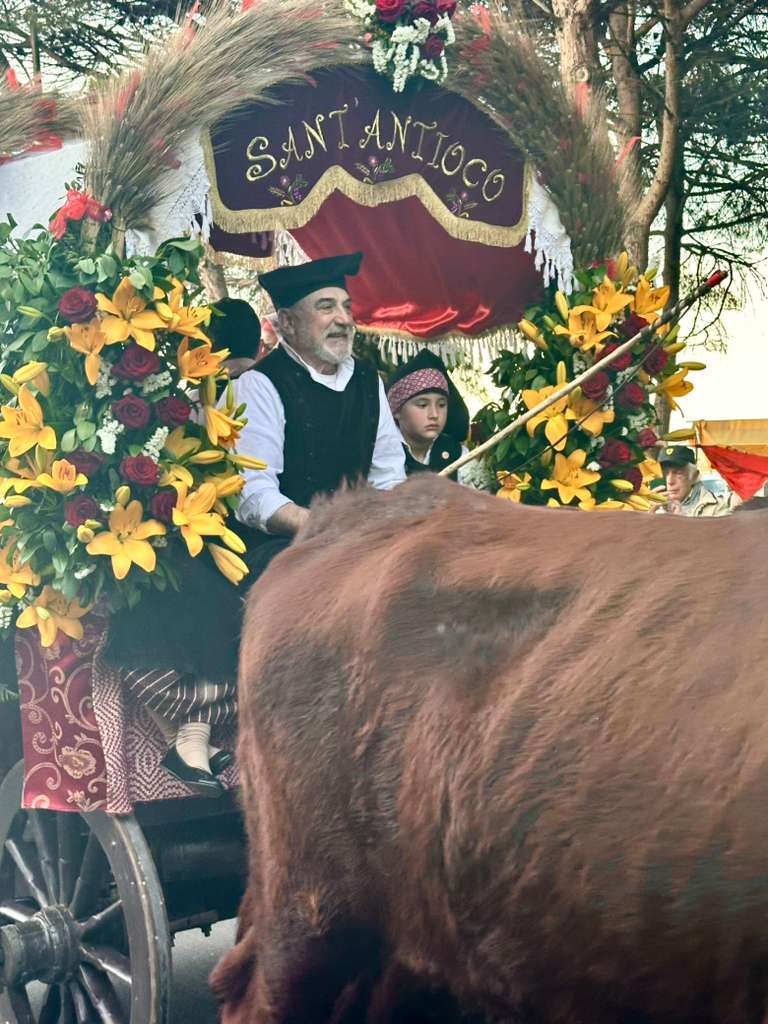

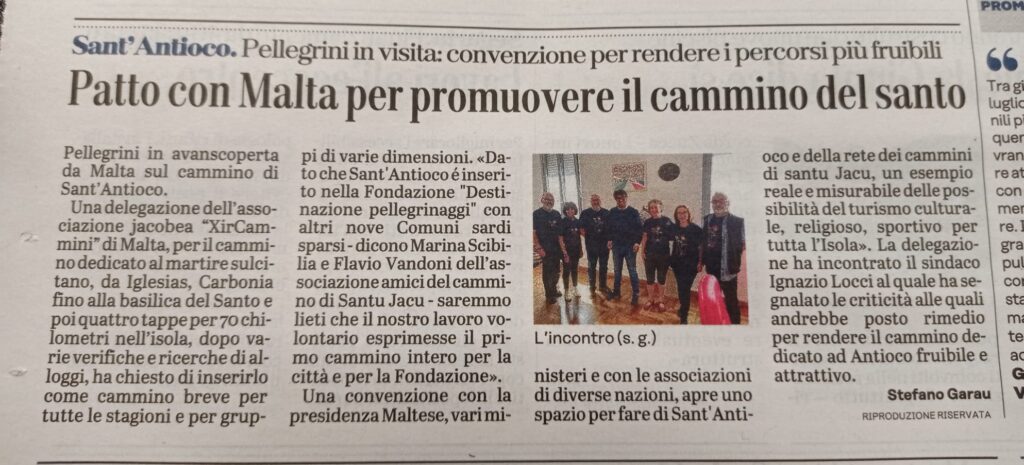
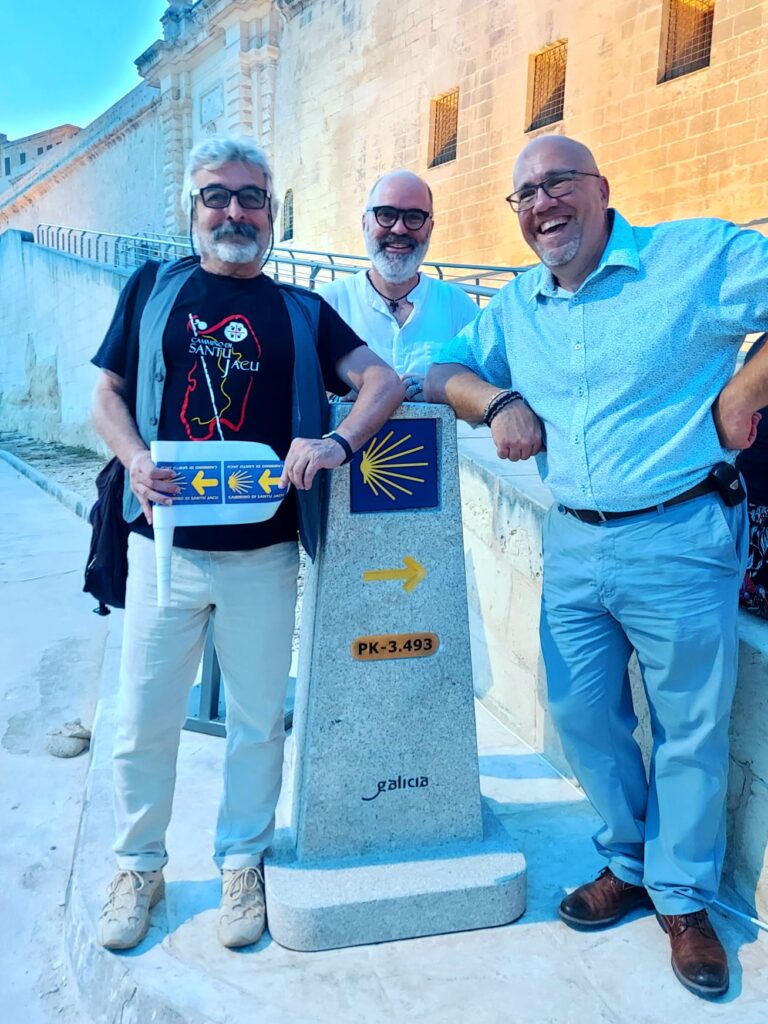
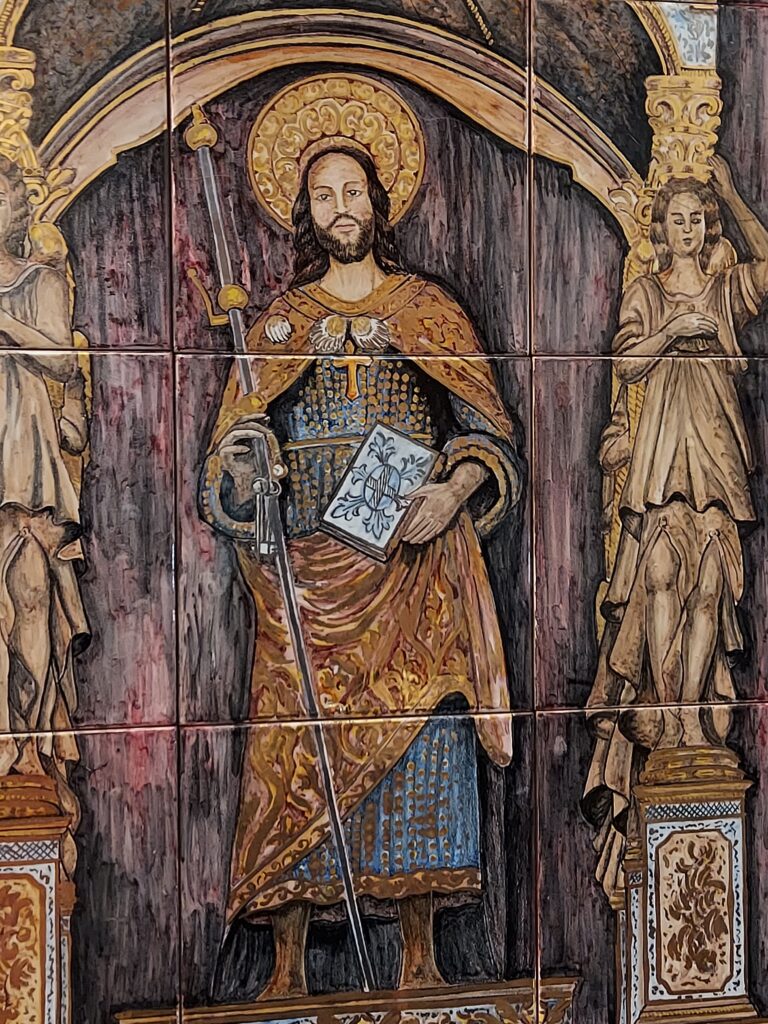
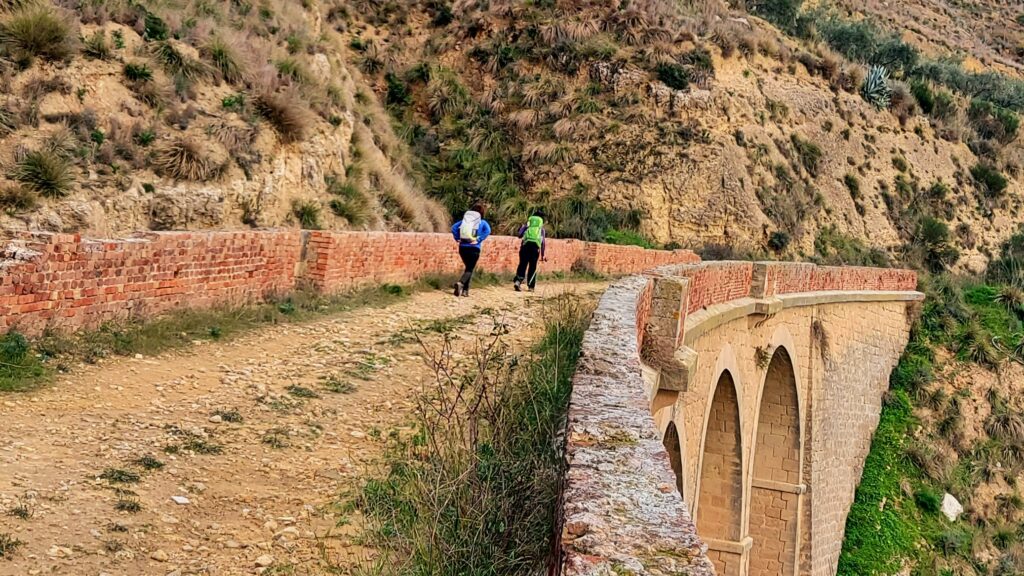
By completing the Camino Maltés project, XirCammini has responded in Mark Twain’s memorable quote, “Forgiveness is the fragrance that the violet sheds on the heel that has crushed it.” Sicilian and Sardinian pilgrims starting from no less than 45 locations in their home territory (from Malta it is only 2 locations) can now claim a distance certificate thanks to the work that XirCammini finalised with the Pilgrims’ Office in Santiago de Compostela this summer; a project that we started 9 years ago and completed a few weeks ago. This is the fragrance we shed on the heels that tried to crush us. We hope that this will be met with a renewed spirit of cooperation.
Camino Maltés is also registered as intellectual property at EU level, not for us to exploit it commercially but to prevent others from exploiting it commercially after so many volunteers have contributed time, energy, intellect and money to create this for the common good.
There have been many partners that stood beside us from day 1 with unflinching commitment. For this XirCammini is very grateful. These include Malta Tourism Authority/Visit Malta, Heritage Malta, The Spanish Federation of the Friends of the Way, Camino Europa Compostela, the Catalan Association of the Camino de Santiago, Pilgrimaps, Walter Vassallo ofm for selflessly providing a free Camino Maltés app, Benjamin for crafting the website and Tucc for all the proof-reading, John Darmanin and Vince Tanti who help in maintaining the signs (much needs to be done again after the cruel summer), and all the XirCammini volunteers who helped in many ways.
Buen Camino
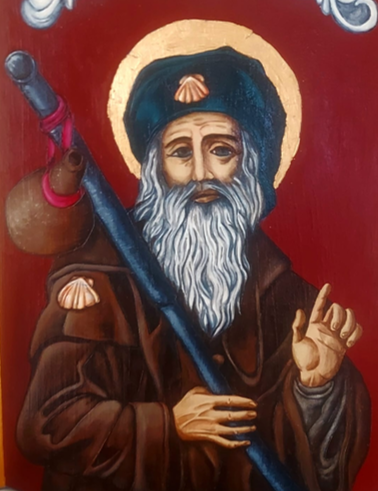
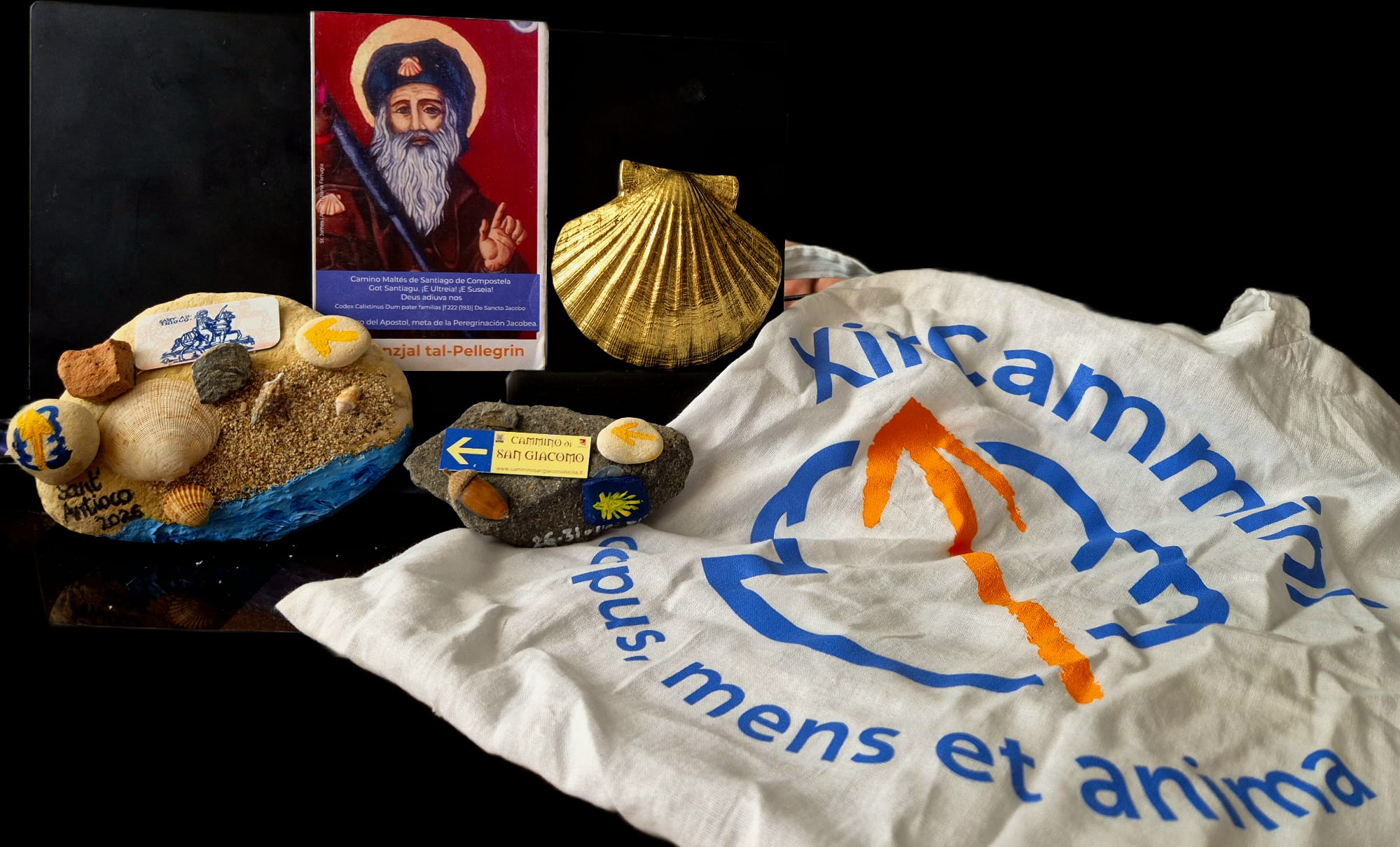
Icon of St James used for the Camino Maltés Credencial (By Tiziana Farrugia)